Outdoor weddings in the GTA come with a strange kind of pressure. You’ve got maybe five months of decent weather, every venue books up by Valentine’s Day, and the rental list keeps growing every time you talk to a vendor.
One day you’re picturing string lights and a dance floor. Next thing you know, someone’s asking about generator wattage and whether your aunt’s backyard needs a permit.
After 35 years of setting up weddings across Brampton, Mississauga, Vaughan, Woodbridge, and Toronto, here’s the checklist we wish every couple had before they started calling vendors.
An outdoor wedding rental checklist is the master list of equipment, furniture, and infrastructure couples rent for an outdoor ceremony or reception.
It usually covers tents, tables, chairs, linens, lighting, dance floors, and climate control, plus the cultural ceremony pieces and weather backups specific to outdoor venues.
This guide gives you real quantities, GTA-specific timing, and the questions most couples don’t think to ask until it’s too late. Before you start, lock down three things: your venue, your guest count, and your budget. Everything else flows from those.
Let’s get into it. We’ve got wedding rental services covering every category below, but the checklist works whether you’re booking with us or anyone else.
How to Use This Wedding Rental Checklist
This checklist works whether you’re getting married in your parents’ backyard in Caledon, at a conservation area near Mississauga, or at a banquet hall that needs an overflow tent. Each section gives you the categories to consider, the math behind the quantities, and what tends to trip couples up.
A few things worth knowing upfront. Most venues include some equipment, but rarely everything. Caterers usually bring their own service equipment but not always dinnerware or linens. And the GTA’s peak wedding season runs roughly May to October, which means rental inventory gets scarce fast.
Read the whole thing once. Then come back to the sections that apply to your venue. By the time you’re done, you’ll have a quote-ready list to send to any rental company.
Your Outdoor Wedding Rental Checklist at a Glance
Here’s what most GTA couples need to rent for an outdoor wedding:
- Tent (frame, pole, pop-up)
- Tables (dining, cocktail, sweetheart, gift, cake)
- Chairs (ceremony and reception)
- Linens (tablecloths, napkins, runners, chair covers)
- Dinnerware, glassware, and flatware
- Lighting (functional and decorative)
- Bar and beverage service equipment
- Dance floor and staging
- Climate control (heaters, fans, generators)
- Ceremony arch
- Restrooms (for backyard or remote venues)
- Cultural ceremony pieces (mandap, kosha, Roman pillars)
Each category below breaks down what you actually need, in what quantities, and when to book.
Tent Rentals: The Single Biggest Decision
Your tent decides almost everything else. Size dictates your guest count limits. Style affects your photos. Setup time changes your venue access window.
And in the GTA, the tent is your insurance policy against three weather problems all at once: surprise thunderstorms, July humidity, and that one weekend in September that drops to 12 degrees overnight.
If you’re not getting married inside a building, tent rentals are where your planning starts.
How to Choose Between Frame, Pole, and Pop-Up Tents
Three main tent types cover almost every GTA outdoor wedding.
Frame tents have no center poles. The aluminum frame holds itself up, so you’ve got an unobstructed interior. They work on almost any surface: patios, parking lots, uneven backyards. They’re great for weddings under 200 guests.
Pole tents use center poles for support. They look more traditional, with the classic peaked wedding shape, and they tend to photograph beautifully.
Pop-up tents are smaller, faster to set up, and best for cocktail hours, ceremony spaces, or supplementary cover. Think bar areas or a kid’s table. They’re not your main reception tent.
Tent Sizing by Guest Count
Tent sizing depends on guest count and what’s inside. A reception tent with a dance floor, head table, DJ booth, and bar takes more space than a ceremony tent with rows of chairs.
| Guest Count | Recommended Tent Size | Best For |
| Up to 80 | 20×40 (frame) | Intimate backyard ceremony |
| 120 to 180 | 30×60 (frame or pole) | Mid-size reception |
| 200 to 240 | 40×60 (pole) | Standard GTA wedding |
| 180 to 400 | 40×100+ (pole) | Large multicultural celebration |
These sizes assume seated dining with a dance floor. If you’re doing a ceremony-only tent (rows of chairs, no tables), you can fit roughly 30 percent more guests in the same square footage. These are just estimates. Please contact us for more accurate sizing.
One thing couples miss: if you’re doing both ceremony and reception under tent, you usually need either two tents or a tent large enough to flip the floor plan during cocktail hour. Talk to your rental company about this early.
When to Add Tent Walls, Flooring, and Climate Control
Tent walls aren’t optional for September and October weddings if you plan to rent a heater. In the hot summer months it is nice to have the ventilation and have the tent open. You can just get one or two sides covered for privacy reasons if needed.
Event flooring matters more than couples expect. Grass gets wet. Heels sink. A subfloor under your tent works as long as the property is not on a slope.
For climate control, the rule of thumb is simple. Outdoor weddings in May or October usually need tent heaters around the perimeter, roughly one per 400 sq ft. July and August weddings benefit from industrial fans, especially in tents without sidewalls. Your rental company should walk you through what’s typical for your date.
Tables, Chairs, and Linens: Getting the Quantities Right
This is where most outdoor wedding rental lists go sideways. Couples either over-rent (paying for tables nobody uses) or under-rent (which gets ugly fast at cocktail hour).
Ceremony Seating
You need one ceremony chair per guest, plus a 10 to 15 percent buffer. The buffer covers no-shows on the RSVP, late confirmations, and the flower girl’s grandmother who decided to come last minute.
For a 120-guest ceremony, that’s about 132 chairs.
White plastic folding chairs are the workhorse choice. Level up with the white resin folding chairs which look gorgeous at outdoor events.
Chiavari chairs (in gold, silver, or natural) elevate the look but cost more. Cross-back farm chairs suit rustic outdoor weddings and tend to photograph well in golden hour shots.
Dining and Reception Tables
For reception seating, you need one dining chair per guest. No buffer here. The RSVPs are firm by then.
Table rentals come in two main shapes. Round tables (60-inch) seat 8 comfortably or 10 snugly. Banquet tables (8-foot rectangles) seat 8 to 10.
A typical 150-guest wedding uses 15 to 20 round tables, plus a sweetheart or head table, plus a gift table, cake table, and DJ table. That’s roughly 18 to 23 tables total.
Pair tables with chair rentals that match your aesthetic. Couples often go simpler for ceremony chairs and more elevated for reception.
Cocktail Hour Furniture
Cocktail hour math gets interesting. You need one high-top per 8 to 10 guests, because not everyone stands at one. Add a few low 36 inch round tables with seating for guests who prefer to sit.
Don’t forget a bar setup, a couple of console or buffet tables for hors d’oeuvres, and signage tables.
Linens, Runners, and Chair Covers
Linen rentals get tricky because the math is per surface, not per guest. You need:
- One tablecloth per dining table
- One per cocktail high-top
- A runner per table if you want a layered look
- Napkins: one per guest, plus 10 percent extra
A common mistake: forgetting linens for the gift table, cake table, and DJ table. Add those into your count.
Tableware: Dinnerware, Glassware, and Flatware
How Much to Rent
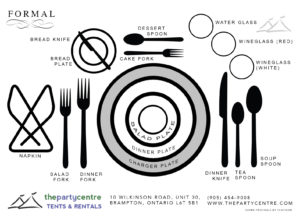
The buffer rule’s simple. Order 10 percent more than your guest count for breakage. Always. 150 guests means 165 dinner plates, 165 salad plates, 165 wine glasses, and so on.
Per guest, you typically need:
- 1 dinner plate
- 1 salad or appetizer plate
- 1 dessert plate
- 1 water glass
- 1 wine glass (or 2 if you’re serving both red and white in separate glasses)
- 1 champagne flute for toasts
- 1 full flatware setting (dinner fork, salad fork, knife, spoon)
Add coffee cups and saucers if you’re serving coffee with dessert.
Specialty Pieces vs What Your Caterer Provides
Here’s where couples get confused. Some caterers include china, glassware, and flatware. Most don’t. Some include only the service equipment (chafing dishes, serving spoons, platters) but expect you to rent place settings.
Ask your caterer this exact question: “What’s included in your contract, and what do I need to rent separately?” Get it in writing.
If your caterer doesn’t include tableware, your rental company can supply everything in a single order. Cleaner logistics. One less truck on delivery day.
Lighting and Power for Outdoor Weddings
Lighting’s the difference between “wedding under a tent” and “wedding inside a glowing white room that happens to be outside.”
Functional vs Decorative Lighting
Two lighting categories matter: functional and decorative.
Functional lighting handles the practical stuff. Cocktail hour after sunset. Path lighting from parking to ceremony. Restroom signage. The dance floor at midnight when nobody can see their drink.
Decorative lighting is the wow factor. String lights (bistro lights, café lights, fairy lights) draped across tent ceilings. Chandeliers hanging from tent peaks.-
A common GTA setup for a 150-guest reception:
- 4 to 6 strands of bistro lights across the tent ceiling
- 2 chandeliers over the dance floor
- Spot lights to light up the tent
Your rental company usually handles the install.
Generator Sizing for Backyard and Conservation Area Weddings
If your venue doesn’t have power, you need a generator. Most backyards have power but can’t handle the load of catering, DJ, and lighting at the same time.
A basic backyard reception (150 guests, DJ, basic lighting, small catering load) typically needs a 5,000 to 7,500 watt generator. Larger weddings, electric ovens, or full coffee setups push that to 15,000 watts or more. This is an approximation only.
The generator should sit 50 to 100 feet from the tent for noise. Make sure you arrange for this and have consulted with the rental company if you need extension wires or if you need to arrange for your own.
Bar, Catering, and Beverage Service Equipment
Bar Setups and Glassware
A wedding bar setup typically includes:
- Portable bar (8-foot, often skirted)
- Backbar table
- Ice bins or coolers
- Glassware (rocks, highball, wine, beer, champagne)
- Bar back stools for bartenders during slow stretches
For 150 guests, plan one bartender per 75 guests, two bar setups for faster service, and roughly 2.5 glasses per guest across the night. People lose track and grab fresh ones.
BBQs, Chafing Dishes, and Service Equipment
Most caterers bring all this. Confirm. If you’re doing a family-style or DIY food situation (uncommon at weddings but it happens at backyard receptions), you’ll need:
- Chafing dishes (one per main dish, plus extras)
- Serving platters and utensils
- Beverage dispensers for water, lemonade, iced tea
- Coffee urns (one 100-cup per 80 guests)
- Trash cans with lids and liners
Dance Floor, Staging, and Audio Visual
Dance Floor Sizing
The math here is dead simple. Plan 4.0 sq ft of dance floor per guest, assuming roughly half your guests are dancing at any one time.
For 150 guests:
- 75 dancers x 4.0 sq ft = 300 sq ft
- That’s a 18×18 dance floor (324 sq ft)
Staging, Risers, and PA Systems
A small DJ riser (4×8 or 6×8) lifts the DJ above the crowd and looks more polished. If you have a band, they usually need an 8×12 or larger stage.
PA system needs depend on tent size and crowd. Most DJs bring their own. If you’re hiring a band, ask whether they’re providing sound or whether you need to rent.
You’ll need a wireless mic for the ceremony and toasts. Don’t skip it. Couples forget this all the time, then half the guests can’t hear the vows.
Restrooms, Climate, and Comfort
When You Need Restroom Trailers
If your venue has indoor plumbing within easy walking distance, you’re set. If it doesn’t (most backyard, conservation area, and rural vineyard weddings), you need restroom trailers.
For 150 guests, plan one restroom stall per 25 to 30 guests over a 4 to 5 hour event. Luxury trailers with running water, climate control, real flushing toilets, and proper lighting cost more but they’re worth every dollar for a wedding.
Porta-potties are fine for festivals. Not for weddings. There are many rental companies that specialize in restrooms. Do your research.
Heaters, Fans, and Insect Considerations
We covered climate control briefly under tents, but a few specifics:
- Patio heaters: 1 per 400 sq ft for shoulder-season weddings (May, late September, October)
- Industrial fans: 2 to 4 for summer weddings in tents
- Mosquito mitigation: bug zappers, citronella torches, or a professional mosquito treatment 24 to 48 hours before the event
What Your Venue Probably Already Provides (And What You’ll Still Need to Rent)
This is the section we wish more couples got to before signing rental contracts. Here’s a rough decision tree.
If you’re at a banquet hall, they almost always provide tables, chairs, basic linens, dinnerware, glassware, flatware, dance floor, and basic lighting. You’ll typically still rent ceremony arches, specialty linens, uplighting, cultural ceremony pieces, and any custom decor.
If you’re in a backyard, the venue provides nothing. You’ll rent literally everything on this checklist.
If you’re at a conservation area, you might get tables and chairs . You’ll rent the tent, full tableware, lighting, and sometimes restroom trailers.
If you’re at a vineyard or barn venue, you’ll usually get tables, chairs, basic lighting, and sometimes a dance floor. You’ll rent linens, specialty tableware, ceremony chairs, cocktail furniture, and climate control.
Always get the venue’s “what’s included” sheet in writing. Cross-reference with this checklist. Whatever’s missing goes on your rental order.
When to Book Your Wedding Rentals in the GTA
Peak GTA wedding season runs May through October. Within that window, June and September are the most competitive. Inventory tightens fast.
Here’s our actual booking timeline:
Peak season weddings (May to October): Book 6 to 9 months out. Tents and large inventory items sell out first. Booking 3 months before the wedding usually means you are risking it.
Shoulder season (April, November): Book 3 to 4 months out. Less pressure, more flexibility.
Off-season (December to March): Book 8 to 12 weeks out. Indoor weddings dominate this period, so outdoor inventory is rarely tight.
If you’ve got a peak-season Saturday in mind, get on a rental company’s calendar early. We’ve seen couples lose their first-choice tent because they waited until April for a July wedding.
For couples planning wedding rentals in Brampton and across the GTA, this booking pattern holds across all rental categories: tents, tables, chairs, linens, lighting.
Permits, Insurance, and Logistics for Outdoor GTA Weddings
We’re not lawyers, and your municipality is the source of truth here. But after 35 years, here’s what tends to come up.
Tent permits. Most GTA municipalities require a permit for tents over a certain size. Brampton, Mississauga, and Caledon each have their own rules. Check with your local building department.
Conservation area weddings. Conservation authorities (Credit Valley, Toronto and Region Conservation Authority) have their own rules around vehicle access, setup hours, alcohol service, and noise. Get the venue’s full rules sheet before booking rentals.
Liability insurance. Most rental contracts require you to carry event liability insurance, often $2 million in coverage. Your home insurance company can usually add a one-day rider, or you can buy wedding-specific event insurance.
Loading and access. Backyard weddings come with delivery realities. Trucks need to get in. If your driveway is narrow or your fence has a single gate, tell your rental company in advance.
How The Party Centre Helps GTA Couples Pull This Off
We’ve been doing this since 1985. More than 35 years. Tens of thousands of GTA weddings, mehndis, receptions, sangeets, baraats, and backyard celebrations across Brampton, Mississauga, Vaughan, Woodbridge, and Toronto.
We’re a family business with a real showroom in Brampton. Couples walk in, sit in the chairs, feel the linens, and see what they’re booking. Our delivery and setup teams cover the GTA directly. We don’t outsource setup. The people who deliver your rentals are the same people who train on them.
What that means for you: when something unexpected comes up the week of your wedding (and something always does, because outdoor weddings), you call one number and we figure it out.
Want to see real GTA weddings we’ve helped set up? Our gallery shows the breadth, from intimate backyards in Caledon to 500-guest receptions in Mississauga.
Frequently Asked Questions About Outdoor Wedding Rentals in the GTA
How much do wedding rentals cost in the GTA?
Wedding rental costs in the GTA typically run $2000 to $10,000 for a mid-size outdoor wedding (100 to 180 guests). This is just an approximation. The biggest variables are tent size, tableware quality, lighting complexity, and whether you need restroom trailers or generators.
How far in advance should I book my wedding rentals?
For peak-season weddings in May through October, book 6 to 9 months in advance. Tents, especially larger sizes, sell out first. Off-season weddings can typically book 8 to 12 weeks out without losing inventory choice.
What size tent do I need for my outdoor wedding?
A rough guide: 20×40 fits up to 60-80 seated guests. 30×60 fits 120 to 180. 40×60 fits 200 to 240. 40×100 or larger fits 180 to 400.
These assume dining with a dance floor. Ceremony-only tents (rows of chairs) fit roughly 30 percent more guests in the same footprint.
Do I need a permit for a backyard wedding in Brampton?
Contact Brampton’s building department or your event planner for the most current rules.
What happens if it rains on my wedding day?
If you’ve booked a tent, you’re covered. The tent becomes the venue. If you haven’t booked a tent and you’re in a backyard, that’s the worst-case scenario. We always recommend a tent for outdoor weddings in the GTA, even on a “guaranteed sunny” June day.
Weather changes fast and a wet ceremony where you can’t move indoors is the one thing no rental company can fix at noon on a Saturday.
Ready to Plan Your Outdoor Wedding Rentals?
Here’s the takeaway after 35 years of GTA weddings: the couples who feel calm on their wedding day are the ones who built their rental list early, asked their venue what was included, and gave themselves a full weather backup. The couples who scramble are the ones who waited until April to book a July tent.
You’ve got the checklist now. The categories, the quantities, the timing, the cultural pieces, and the GTA-specific stuff most blogs skip.
If you want a real quote based on your guest count, venue, and date, request a quote and we’ll put together a full rental list for your wedding. No pressure, no upsell, just a clear estimate so you can plan with confidence.